How Nothing Sold the 4a Without Selling It:The Phone That Launched Itself
Walk through Shoreditch in London right now and you will see them. Posters slapped on bus shelters. Stickers on lampposts. A storefront drenched in bubblegum pink. There are no price tags. No specifications. Just a date: March 5. This is not how phones usually arrive. Most companies spend millions telling you why you need their product. Nothing has spent the last three months making you ask them if you can have it. The Nothing 4a campaign is a reversal of the traditional sales funnel. Instead of pushing information outward, they have created a vacuum that pulls you inward.
The First Move: Taking Control of the Noise
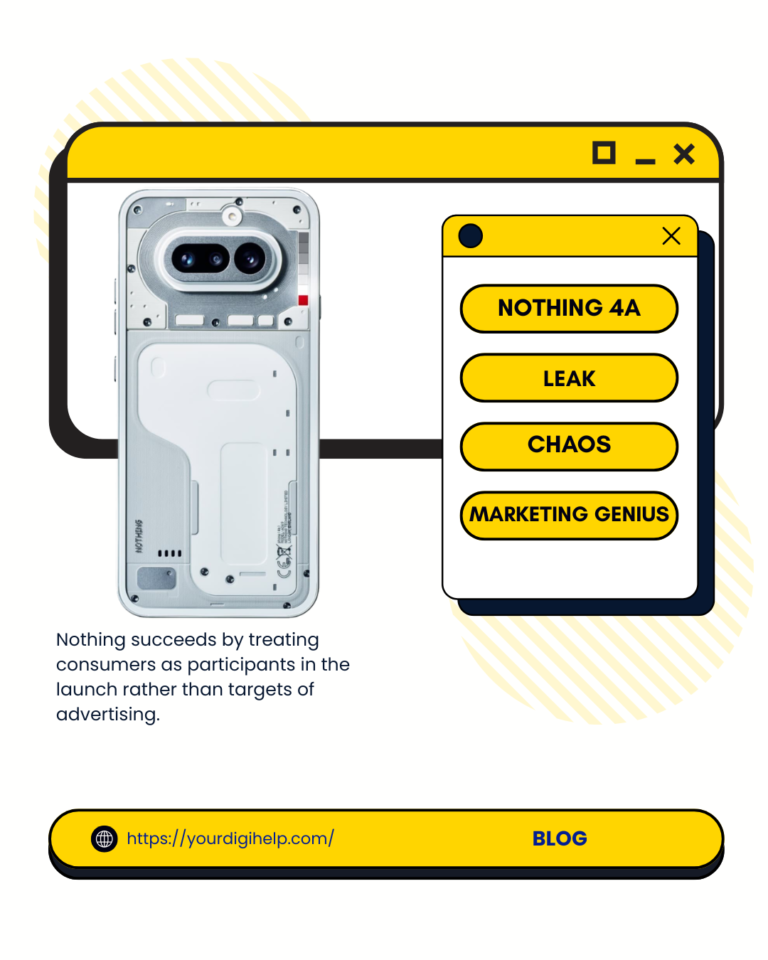
Let us address the elephant in the room. The Nothing 4a leaks.
If you follow tech Twitter, you have seen the posts. Some say the battery is 5000mAh. Others say 4800mAh. One leaker insists on the Snapdragon 7s Gen 4. Another is equally certain it is a Dimensity chip.
This looks like chaos. It is not.
The Nothing team understands something important about human psychology. Certainty is boring. Doubt keeps you refreshing the page. Over the past ninety days, the volume of conflicting rumors about the Nothing 4a has actually increased as the launch date got closer. That is not how leaks usually work. Usually, the picture becomes clearer. Here, it became fuzzier.
Look at the timing. Every time a major leaker posted something incorrect, Nothing’s social media accounts went quiet. No corrections. No clarifications. Just silence. That silence was interpreted by the community as confirmation. The community then argued about it. Those arguments created threads. Those threads created visibility.
Nothing did not stop the leaks. They outgrown them.
The Visual Campaign: Pink as a Statement
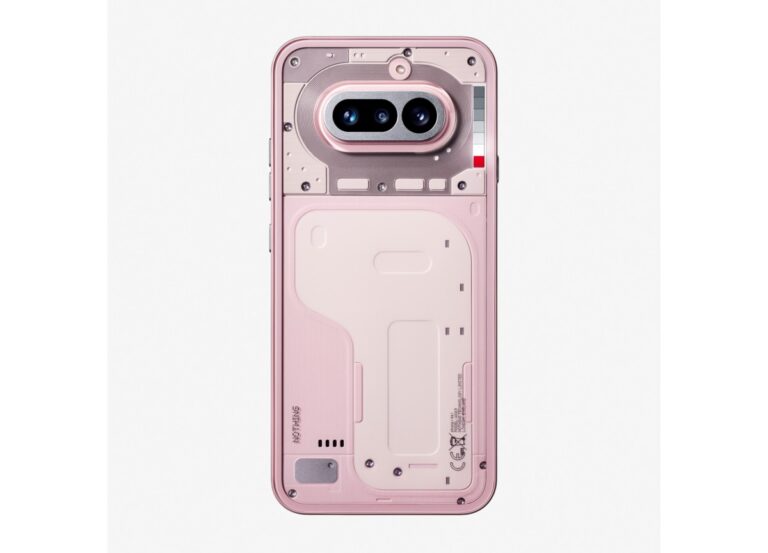
On February 25, the company released images of the Nothing 4a in pink.
This was a gamble. The brand built its identity on transparency and monochrome minimalism. The Phone (1) and Phone (2) were grey and white. The Ear and Ear (a) were clear plastic. Color was the enemy of sophistication.
Or so we thought.
The pink Nothing 4a is not a pastel. It is not a rose gold. It is a loud, confident, almost aggressive pink. In the marketing images, it sits against dirty concrete walls and spray-painted plywood. It looks like something that belongs in a record store, not a phone shop.
The company explained the technical process behind this color. Lucy Birley, who leads their color and materials team, described it as a “desaturated red” that changes depending on how light hits the layered resin underneath the glass. This detail matters. It gives the people who buy the phone something to talk about. They are not just buying a pink phone. They are buying a specific engineering choice.
This is the difference between a trend and a product.
The Glyph Gets an Update
When Nothing launched its first phone, the Glyph Interface was dismissed as a gimmick. LED lights on the back that flash for notifications? Nice party trick, critics said. It will wear off.
Three years later, the Glyph is the visual anchor of the Nothing 4a marketing.
Over the last ninety days, the company has slowly revealed changes to this system. The LED strip has been redesigned into a 1×6 configuration. This is not random. It allows for more complex light patterns and better battery efficiency. In their marketing materials, they show the Glyph responding to music. They show it pulsing during charging. They show it as an indicator for the camera countdown.
The message is consistent: this is not decoration. It is communication.
For the Nothing 4a, the Glyph also gains a practical function that the marketing team is leaning into heavily. The red recording indicator. When you record video, a small red light on the back tells everyone around you that the camera is active. This is privacy protection built into hardware. It cannot be disabled by software. It cannot be hacked.
By marketing this feature, Nothing positions the 4a as the phone for people who care about security but refuse to carry a brick-like “privacy phone.” It looks cool. It also protects you. That combination is rare.
Twitter: The Art of Strategic Silence
The Nothing Twitter account has always been different. They banter. They tease. They respond to trolls with emojis.
But over the last three months, something shifted. The account became quieter about the product and louder about the culture.
When Apple sent out invitations for their spring event, Nothing did not congratulate them. They did not ignore them. They took the invitation, plastered their own “March 5” date over it, and posted it. This is high-risk behavior. It invites comparison. It invites backlash. It also invites attention.
The people who loved it retweeted it. The people who hated it quote-tweeted it with angry comments. Both actions spread the date further.
This is the core of the Nothing 4a marketing strategy. They are not trying to make everyone like them. They are trying to make everyone look at them.
The India Factor: Where the Volume Lives
India matters to this launch more than any other region.
At the Founders Forum India event earlier this year, Akis Evangelidis, the company’s India President, explained the math. India was not chosen because it was cheap to manufacture there. It was chosen because the early social media followers came from there. The demand was organic.
For the Nothing 4a, the India strategy has shifted slightly. The phone is expected to cost more than the 3a did. Component shortages have driven prices up globally. In a price-sensitive market like India, this could have been a disaster.
The marketing team solved this by shifting the conversation. The Indian campaigns do not lead with price. They lead with design and the “Make in India” manufacturing story. They are selling pride of ownership rather than value for money.
Early indicators from the Nothing India community page suggest this is working. The pre-launch discussions are less about “is it worth it” and more about “which color should I choose.”
The India Rollout: Beyond the Metros
The India strategy for the Nothing 4a deserves a closer look because it reveals how the company thinks about scale.
Previous Nothing phones sold well in India’s major cities. Mumbai, Delhi, Bangalore. The early adopters live there. The coffee shop crowd lives there.
For the 4a, the marketing is pushing further out. There is a deliberate effort to build visibility in tier-2 and tier-3 cities. Places like Pune, Ahmedabad, and Lucknow. How do you sell a phone in these markets without the same media coverage? You put it in stores.
Over the last two months, Nothing has expanded its offline retail presence significantly. The company understands something important about Indian consumers outside the metros. They want to hold the phone before they buy it. They want to see the transparent back. They want to feel the weight.
The online buzz creates curiosity. The offline stores satisfy it.
Early reports from retail partners suggest the pink colorway is generating significant interest in these markets. That is surprising. Pink phones are usually associated with female consumers in mainstream marketing. Nothing has avoided that trap entirely. They market the pink as unisex. As architectural. As a design statement rather than a gender statement.
This widens the appeal. A father in Lucknow might buy the pink Nothing 4a for himself, not for his daughter. That is the shift the marketing team aimed for.
The Community Board: Marketing as Democracy
Here is something unusual.
In the middle of the Nothing 4a teaser campaign, the company held elections.
The Nothing Community Board Observer for 2026 was chosen by the users themselves. Candidates posted manifestos. Users debated the merits of each candidate. A vote was held.
This has nothing to do with the hardware of the Nothing 4a. It has everything to do with its ecosystem.
The new phone will launch with updates to Nothing OS. It will have new widgets. It will have new Glyph integrations. By involving the community in governance before the phone arrives, the company ensures that the people who care most about the software feel invested in its success.
When the Nothing 4a reviews appear next week, the most active community members will defend it online. Not because they are paid. Because they helped choose the person who represents them.
The Essential Apps Connection
In January 2026, Nothing opened beta access for “Essential Apps” on the Phone 3. These are not games or social media clones. They are tools designed around the Nothing philosophy. Minimal interfaces. Deep Glyph integration. Focus on productivity.
Why does this matter for the Nothing 4a?
Because the 4a will launch with these apps built in. The marketing team has spent the last three months letting Phone 3 users test and critique these tools. The feedback has been public. The improvements have been visible.
By the time the 4a arrives, the apps will have been battle-tested by the community. The bugs will be fixed. The features will be refined.
This is a form of marketing that requires patience. You cannot rush it. You have to let people use unfinished software and trust them to tell you what is wrong. Most companies are too afraid to do this. Nothing does it anyway.
The result is that the Nothing 4a software experience will feel familiar to anyone who has been following the community. It will not be a mystery. It will be the result of months of public collaboration.
Instagram: From Clean to Gritty
Scroll back through the Nothing Instagram feed six months. Clean product shots. White backgrounds. Precise angles.
Now scroll through the last three months. Spilled paint. Torn posters. A storefront that looks vandalized. Hands holding the pink phone against a grey London sky.
The aesthetic shift is deliberate. Clean product photography sells to people who are already looking. Gritty street photography makes people who are not looking stop and stare.
The “It’s Pink Now” campaign uses fly posters. These are not high-gloss billboards. They are cheap paper slapped on walls with wheat paste. They tear. They get rained on. They get tagged by other graffiti artists.
This imperfection is the point. A perfect ad is forgettable. An imperfect ad is real.
The Design Deep Dive: Selling the How
On February 28, the company released a twelve-minute video about the Nothing 4a design.
Twelve minutes is an eternity on the internet. Most product videos are ninety seconds. People click away.
This video works because it is not trying to hold your attention with flashy edits. It is slow. It shows the resin being poured. It shows the LED strips being tested. It explains why the red recording indicator was included even though it added cost.
This video targets a specific audience. Not the mass market. The enthusiasts. The people who will watch the whole thing, then go to the comments to discuss the engineering choices, then go to Twitter to argue about whether the resin layering technique actually improves light diffusion.
Those enthusiasts are free marketing. They will explain the product to their friends better than any ad could.
The Competitor Positioning
No phone exists in a vacuum. The Nothing 4a arrives at a specific moment in the market.
Google is pushing AI. Samsung is pushing foldables. Apple is pushing ecosystem lock-in. Each of these strategies requires the consumer to buy into a vision of the future. AI will organize your life. Foldables will replace tablets. The ecosystem will keep you inside the walled garden.
Nothing offers something different. They offer restraint.
The marketing for the 4a does not mention AI features prominently. It does not claim the phone will change your habits. It shows you the phone itself. The materials. The colors. The lights.
This is a deliberate contrast. While competitors sell you a future that does not exist yet, Nothing sells you an object that exists right now. You can see it. You can hold it. You can put it in your pocket.
The “Built Different” tagline works on two levels. It means the phone is built differently from other phones. It also means the company is built differently from other companies. They are not chasing the same trends. They are walking away from them.
For consumers tired of AI hype and foldable fragility, this message lands hard.
The March 5 Event: What to Watch For
The launch happens at Central Saint Martins in London. This is an art school. Not a convention center. Not a hotel ballroom.
The choice of venue tells you who they are speaking to. Artists. Designers. Students. People who care about how things look more than how fast they charge.
The theme is “Built Different.” This phrase does heavy lifting. It suggests the hardware is different. It suggests the software is different. It suggests the company itself is different.
After three months of leaks, posters, and pink paint, the actual specifications will finally be confirmed on Thursday. The storage. The chip. The camera sensors. The price.
By then, it might not matter what the specs are. The decision to want one has already been made.
Conclusion: The Day After the Launch
On March 5, the speculation ends. The Nothing 4a will stand on a stage in Central Saint Martins. The specs will be confirmed. The price will be announced. The pre-orders will open.
But the marketing will not stop. It will shift.
The people who buy the phone will become the next phase of the campaign. Their unboxing videos. Their Instagram stories. Their tweets about battery life. Nothing has spent three months building a machine that generates curiosity. Once the phones ship, that machine will generate validation.
The strategy is unusual because it treats the consumer as a participant rather than a target. The leaks were not controlled. They were allowed. The pink was not tested. It was trusted. The community was not consulted. They were given a vote.
This approach carries risk. It requires letting go of the message. It requires trusting that people will say the right things even when you are not telling them what to say.
For the Nothing 4a, that trust appears to have paid off. The phone is not even out yet and the conversation has already been happening for three months.
The question now is whether the product can deliver what the marketing promised. On Thursday, we find out.