GEO vs AEO vs SEO: 2025 Strategy + GSC Results | YourDigiHelp
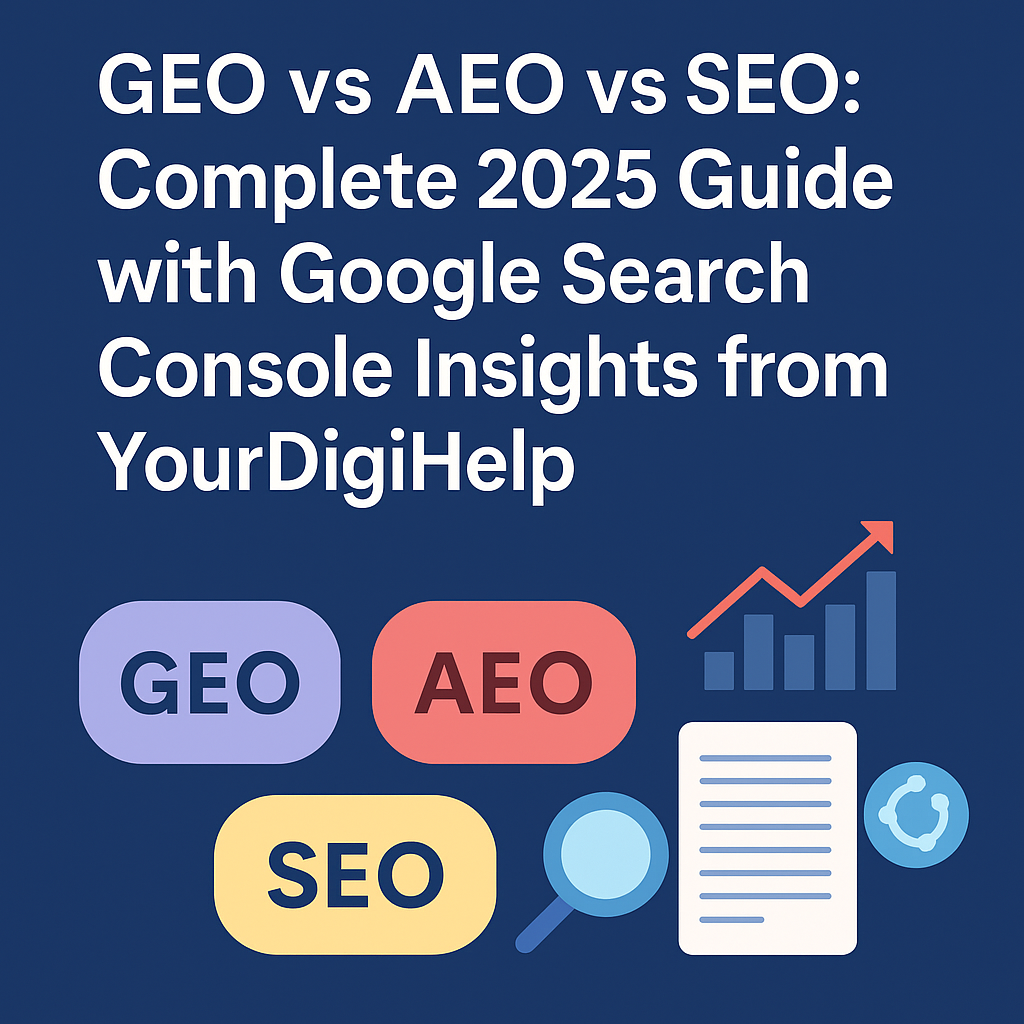
GEO vs AEO vs SEO: Complete Guide with Google Search Console Insights from YourDigiHelp The digital search world is evolving faster than ever before. What once worked for ranking on Google is now just the starting point. While Search Engine Optimization (SEO) remains essential, new contenders have stepped into the arena: Generative Engine Optimization (GEO) and Answer Engine Optimization (AEO). These emerging strategies are transforming how content is created, ranked, and served to users—especially with AI and voice search becoming the norm. So what does this mean for your website, blog, or business? Let’s break it down. Traditional SEO – The Foundation of Visibility What is SEO? SEO stands for Search Engine Optimization, which is the process of optimizing your website to appear higher on search engine results pages (SERPs). It’s all about: Targeting relevant keywords Building valuable content Improving user experience Getting high-quality backlinks Why SEO Still Matters in 2025 Despite the emergence of AI-powered tools and conversational search engines, SEO hasn’t lost its value. It’s evolving. SEO lays the groundwork—without it, your content won’t get discovered, indexed, or trusted by Google or other engines. The Three Pillars of SEO 1. On-Page SEO Content Optimization Your blog or website must deliver useful, original, and valuable content. Make it engaging, visually structured, and helpful for your readers. Keyword Usage Smart keyword targeting is still relevant. Tools like Ubersuggest, SEMrush, and Google’s Keyword Planner help find long-tail keywords. Internal Linking Linking between your pages helps search bots crawl better and keeps users on your site longer. 2. Off-Page SEO Backlink Building Getting backlinks from high-authority domains increases your site’s credibility. Think guest posts, citations, PR outreach. Social Signals While indirect, shares on platforms like LinkedIn, X (Twitter), and Reddit boost visibility and drive traffic. 3. Technical SEO Website Speed & Core Web Vitals Google’s Page Experience update prioritizes fast, responsive websites. Use tools like Google PageSpeed Insights. Mobile-Friendliness Most traffic is mobile. Your site should look and work well on every device. HTTPS, Sitemap, and Robots.txt Security and crawlability are key. Set up your SSL certificate, submit sitemaps via GSC, and refine robots.txt to guide bots. The Rise of GEO – Generative Engine Optimization What is GEO? GEO refers to optimizing your content specifically for generative AI models, such as ChatGPT, Google Gemini, and Bing Copilot. These engines don’t show links like Google—they generate answers, so your content must be tailored for context, structure, and data markup. Why GEO is Important Today As more users rely on AI tools to get answers directly, websites that feed these models with clean, structured, and helpful content will win. How to Optimize for GEO Use structured data (schema markup). Write in Q&A formats. Offer factual, detailed, context-rich paragraphs. Keep answers conversational and accurate. AEO – Answer Engine Optimization What is AEO? AEO focuses on optimizing content to directly answer user questions, especially in formats suitable for: Featured Snippets Google’s People Also Ask Voice search AI-generated responses Featured Snippets & Zero Click Searches More people are getting answers without clicking on websites. To appear in these answers: Use bullet points Include definitions or summaries Use H2/H3 headers as questions Optimizing for Voice Search and AI Answers Voice search queries are longer and more conversational. Think: “How do I fix a slow-loading website?” vs “site speed tips”. GEO vs AEO vs SEO – A Comparative Analysis Feature SEO AEO GEO Goal Rank web pages Answer user queries directly Get cited by AI-generated answers Content Style Keyword-focused Question-answer format Structured, detailed, contextual Platforms Google, Bing, Yahoo Google (Featured), Voice Assistants ChatGPT, Bing Copilot, Gemini Ranking Factor Backlinks, On-Page, Speed Snippet-ready content Trustworthy, AI-friendly language Integrating All Three: A Modern SEO Strategy Content Strategy that Combines GEO + AEO + SEO Use a blended approach: Write human-first content with SEO principles Structure content for snippets and answers Add structured data and citations for GEO AI-Friendly Structured Data Markup Use FAQ schema, Article schema, and Organization schema to help AI bots understand and quote your content correctly. Search Intent Over Keyword Matching Understand why people are searching. Are they looking for answers, comparisons, tutorials, or solutions? YourDigiHelp’s SEO Journey: 28-Day Optimization in Action YourDigiHelp implemented a focused 28-day SEO campaign using Google Search Console insights. Performance Report Overview (GSC Data) From the GSC screenshot: Total Clicks: 50 Total Impressions: 2.25K CTR: 2.2% Average Position: 80.8 Key Improvements Made Meta titles and descriptions optimized Blog content expanded for AEO-style Q&A format Internal links and anchor texts fixed Image alt tags and loading speed improved Clicks, Impressions, and CTR Growth While impressions grew steadily over 28 days, strategic GEO and AEO enhancements are expected to gradually boost click-through rate and rankings further. How to Future-Proof Your Website’s SEO Embrace AI Content Carefully Use AI tools to assist, not replace. Always add a human touch and verify facts. Prioritize Search Experience User experience is key—faster loads, mobile responsiveness, clean design, and clear CTAs. Monitor Trends through Google Search Console Check GSC weekly for clicks, impressions, and query data. Adjust your strategy based on what’s working. Conclusion The lines between traditional SEO, AEO, and GEO are blurring—but that’s good news. It means you can reach more users in more ways, across more platforms. Don’t abandon SEO. Evolve it. Create structured, informative, human-written content that answers real questions and fits modern search behavior. YourDigiHelp is leading by example—using performance tracking, technical SEO, and AI-enhanced strategies to climb the ranks. Are you? FAQs 1. What is the difference between GEO and SEO?GEO targets AI-generated platforms, while SEO focuses on ranking web pages in traditional search engines. 2. Is traditional SEO dead in the age of AI?Not at all—SEO is the base. It’s evolving to include GEO and AEO practices. 3. How can I optimize my website for AEO?Structure content as questions and answers. Use FAQ schema and target featured snippets. 4. Why are impressions increasing but clicks not?Your titles or meta descriptions may not be compelling enough. Improve your CTR strategy. 5.